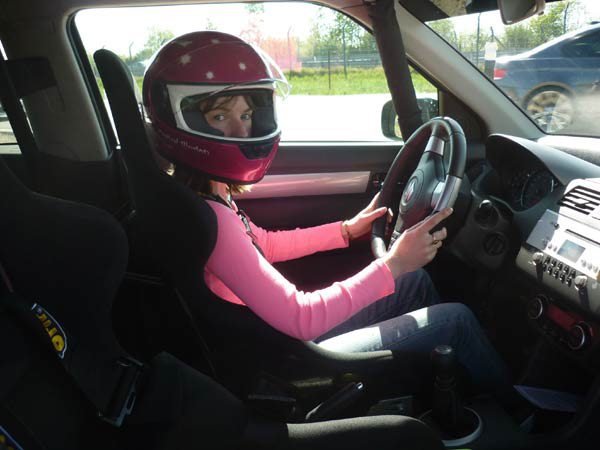
Laura drives the Nürburgring
Laura Keane shifts into high gear and shares some tips on getting the most out of Track Days
Track days, for me, are one of the most exciting things to do in the world, and when you do your first one – you’ll be bitten by the bug and after that, it becomes an addiction.
There are mainly three different track days you can do in Ireland (providing you have a full licence)
Open/Public days – anyone can enter with differing levels of experience, these are organised by the track itself
Club days – you have to be part of a club/forum, usually you’d have to be well known to regulars before you can partake
Dedicated track days – there are a limited number of sites that will organise a track day for you but with minimum numbers a requirement
I always opt for the club days, because, I know who I’ll be on track with and that track etiquette and mutual respect will be adhered to. The vast majority are now friends, who I’ve met down through the years on track days. Open days are not for me because I don’t know anyone out there driving and what their abilities are – but each to their own. Remember, you are not insured when you are on track – so anything that happens to your car (or damage you cause to another car) is your responsibility.
Do you need a special car to go on track?
Not necessarily. Obviously it helps if you own some sort of sport based car as these are usually set up to absorb the demands of a track and will handle better. But I’ve seen many people go out in normal everyday cars, taking their time and still having fun. I would recommend buying a CG – Lock for your seatbelt. I’d also recommend fitting a towing eye – if you don’t have one and you go into the gravel, they will lift your car using the underbody with a forklift.
Do I need special clothing?
Yes, a helmet (which can be open or full face) and driving shoes (arriving in heels won’t really do ladies). You can borrow a helmet if you don’t have one but we girls usually have small heads so this may not be an option for a mainly male dominated sport. Wear a long sleeve top if not too hot and long pants are a must (these are for fire hazard reasons).
About that – will there be other girls on track?
Sadly, we are a rare breed, so nearly all of the time I’m the only girl on track. Guys tend to notice this though, so they won’t be too hard on you. They are nice like that! There are usually plus ones floating around the paddock so you’ll have other girls to talk to.
You’re talking me around, but I’m not brave enough to go on track just yet…
That’s OK! Come along to a track day with a helmet and ask to go for passenger laps with anyone, they are more than willing to oblige (who could refuse a lady?) and if you don’t ask you won’t get! Ask them if they mind taking the first few laps slow at first until you get used to the speed and the way the car corners. This is also a good way to get to know the layout of the track, braking distances and racing lines for when you’re feeling brave enough to venture out yourself.

OK, I want to do it!
Great – get yourself signed up to a club and get yourself known, alternatively most tracks will do driver training before they will leave you out on track on your own.
What do I need to do in the days leading up to it?
This is not the week to do everything to the car that you’ve been meaning to do in the last few months. If you have a strange knock or something mechanically wrong you need to get this checked out before you venture on track. You need to have decent tyres with thread left on them. Make sure they are inflated to correct pressures, consider an extra 2 psi if you have soft sidewalls or low profile tyres. Do an oil and filter change before going on track. Check all your fluid levels and brake pads. These are the basics, and are essential.
It’s the night before…
Make sure your helmet and licence are packed, take all your stuff out of the boot and anything that can move around in the cabin should be removed too (you don’t want your handbag hitting you in the face while cornering), prepare food unless food is provided and a full fuel can just in case you run out. Go to bed early with butterflies in your tummy!
It’s finally here!!
Leave in enough time so that you can get there early, fill your car 3/4 full of fuel as a full tank will usually overflow upon cornering, get a garage if possible and unpack your car, have a cuppa and a chat and *breathe*. Head over to sign on with your licence when called, and then sit down for the drivers briefing and listen to what they have to say, they speak from experience.
I don’t understand flags.
Flags are important as they are the marshalls only way of communicating with you. There are many different colours but the most commonly used ones are as follows:
Blue flag: there is someone faster behind you, let them past
Yellow flag: slow down, there may be an incident up ahead
Red flag: slow down and return to the pits at the next opportunity
Black flag: there may be something mechanically wrong with your car that you can’t see, or you’re acting the eejit 🙂
Checkered flag: The session has ended
It’s time to go on track!!
I usually don’t go out for the first hour – this gives all the eager beavers a chance to get it out of their system and also to burn off any grease/wet/debris/etc off the track. It’s usually the busiest time of the day – so not the best time for beginners. Head out on your first few laps with someone experienced showing you the lines. Make sure to do your warm up and cool down laps.
Track ettiquette
Have respect for other users and they will have respect for you. You need to be looking in your mirrors all the time, especially before you commit to a corner. Check your blind spots. If a car that’s faster than you comes up behind you then they will wait to see if you’ve noticed them – especially if you’re a novice. When you’ve seen them indicate on the next straight stretch, if you are committed to a corner, follow through and then indicate, nobody should ever be overtaking you on a bend. Then as they are passing you back off the throttle, it’s not a race, the last thing you want is two of you head to head entering a corner. Overtaking is always on the left – make sure that others have seen you before you attempt to overtake too.
There are users on track acting dangerously around me!
Report them to the marshalls – marshalls may not be on every corner and may not see this, it’s their job to make things safe for everyone.
What if I crash or lose control?
It happens, luckily not very often. I can’t tell you the amount of times I’ve spun out on track! There will come a time when you’ll want to see how far you can push your car to discover its (and your) limits. The trick to this is knowing where to test the limits i.e. you don’t want to be doing it where there is absolutely no run off around you, that will usually end up with you in the barrier. Take it easy in these bends and you will be fine.
If you do crash or end up in the grass – if you can drive out do – just check for traffic before reversing etc onto a live track. If you get stuck stay in your car (it’s the safest place to be) and wave out the window – a marshall will see you and send a tow truck (remember your towing eye) or a forklift. Remember if the track is wet and greasy you can have a spin at 20 kmph, which I embarrassingly discovered at my last track day during a cool down lap! Losing control of your car – while scary – is a great way of learning to handle your car in a relatively safe environment, which can be extemely helpful when you are driving on the road (which I’ve also discovered a few times!). For example sometimes it’s better to power out of the start of a spin and opposite lock instead of just freezing and planting your foot on the brake.
How long should I be out there?
This depends on your car but I wouldn’t recommend more than 10 minute intervals. Being on track is tough going on your car – and if it’s your daily driver it deserves a bit of TLC. When you come back into the pits, don’t put your handbrake on – I can not stress this enough – as your brake will stick on to your hot discs and may not come off or warp your discs! Turn your car off, stick it in 1st and take your foot of the clutch. Open your bonnet to help with cooling and check your tyres still looked pumped. Check your fluid levels again.
I’m hooked!
Great – well done you! Look forward to your next one and becoming a better driver and learning cleaner lines. You will have good days and bad days. Just remember it’s not a race, you shouldn’t be trying to perfect lap times and beware of the red mist!!!
I’ve driven Mondello, Phoenix Park, Kirkistown and the Ring, and also been to Spa and Snetterton, so any questions at all let me know, even though I’ve been on track countless times I’m still learning!
Laura Keane
21st May, 2018