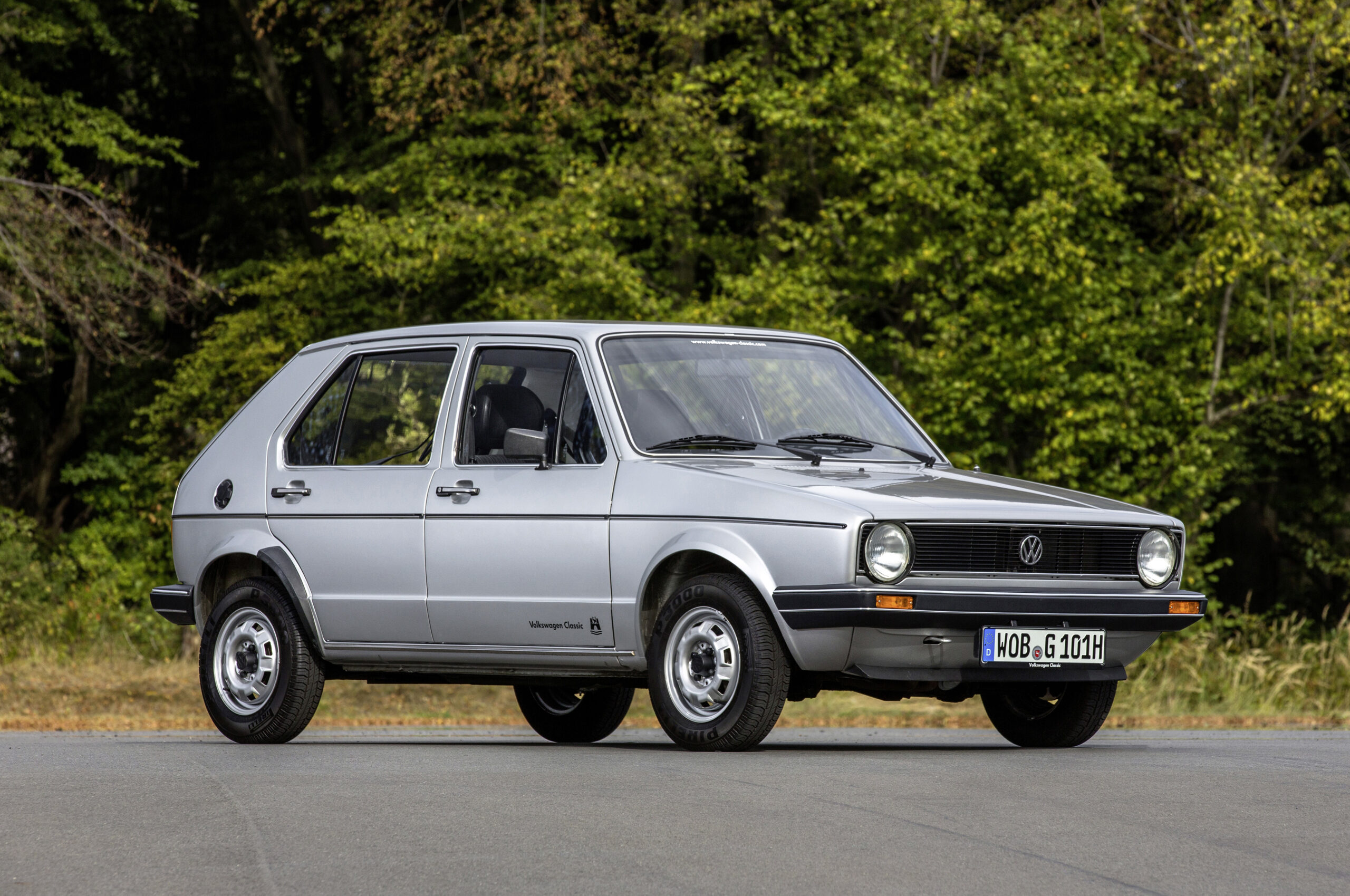
Volkswagen Golf – first Generation
Cars have been steadily increasing in size for more than two decades, but the trend comes at a cost. A new report from Transport & Environment warns that larger vehicles are reducing parking capacity, increasing road safety risks, and driving up energy consumption. Without action, the average new car will continue to grow, making cities less practical and motoring more expensive.
For years, cars have been getting bigger. What was once considered a large family car is now often overshadowed by SUVs and crossovers that dominate new car sales. While many buyers appreciate the extra space and higher driving position, a new report suggests this trend is creating unintended consequences for road safety, city planning and energy consumption.
According to the report, the average dimensions of new cars continue to increase every year. Vehicle length is growing by around 1.2 centimetres annually, while height is increasing by 0.5 centimetres. Previous research has also found that both vehicle width and bonnet height are continuing to rise.
If this trend continues, the average new car sold by 2040 is expected to measure 4.56 metres long and 1.90 metres wide, compared with 4.09 metres long and 1.69 metres wide in 2000.
Bigger Cars, Smaller Cities
As vehicles grow, the space available in our towns and cities shrinks.
The report estimates that between 8.5% and 14% of on-street parking spaces could effectively disappear by 2040 because many existing spaces simply won’t accommodate larger vehicles. For cities already struggling with parking shortages, that’s a significant challenge. In Dublin alone, between 1,700 and 2,700 Dublin City Council-managed on-street parking spaces could be lost by 2040 if cars continue to grow in size. Across Irish cities, the loss could run to tens of thousands of spaces, with the estimates considered conservative as they don’t account for the extra manoeuvring room larger vehicles require.
The Safety Concern
The report also raises concerns about the impact of larger vehicles on vulnerable road users.
Taller bonnets and wider vehicles can reduce driver visibility, particularly when pedestrians and cyclists are close to the vehicle. Children are especially vulnerable because they are more easily hidden from a driver’s view.
Researchers estimate that if vehicle sizes continue to increase unchecked, there could be around 2,600 additional deaths among vulnerable road users by 2040, including 79 children.
Bigger Cars Need More Energy
Whether powered by petrol, diesel or electricity, larger vehicles require more energy to move.
The report estimates that by 2040, Europe’s growing fleet of larger vehicles would require an additional 22.5 terawatt-hours (TWh) of electricity every year compared with a scenario where vehicle sizes were kept in check. That’s equivalent to the annual output of around 1,500 onshore wind turbines.
For motorists, that could mean an estimated €7 billion in additional annual household charging costs.
The impact isn’t limited to electric vehicles either. For petrol and diesel models, the report estimates that larger vehicles would consume the equivalent of 100 million additional barrels of imported oil by 2040.
What Needs to Change?
Rather than banning larger vehicles, the report recommends encouraging a move towards more appropriately sized cars through a combination of European, national and local policies.
Among its recommendations are:
- Limiting bonnet height to 85cm and vehicle width to 192cm.
- Including vehicle dimensions on registration certificates.
- Designing EV incentives that favour smaller, more efficient cars.
- Improving direct driver visibility, particularly around children.
- Adjusting vehicle taxes and parking charges to reflect vehicle size.
The Bottom Line
Consumers will always have different needs, and larger vehicles remain essential for many families and businesses. However, the report argues that the steady growth in average vehicle size is creating wider problems that affect everyone—from reduced parking availability and higher energy demand to increased risks for pedestrians and cyclists.
Its conclusion is clear: choosing the right-sized vehicle, supported by sensible policy, could make roads safer, cities more liveable and motoring more affordable in the years ahead.